
Create a Wallet
Separate creation from import, then make a private offline backup immediately.
Open guide →A multi-chain wallet, blockchain network and Web3 knowledge hub from imtoken
From multi-chain assets, network selection, sending and receiving to DApp connections, token approvals and blockchain concepts, imtoken helps you understand each on-chain action and build security checks into everyday wallet use.
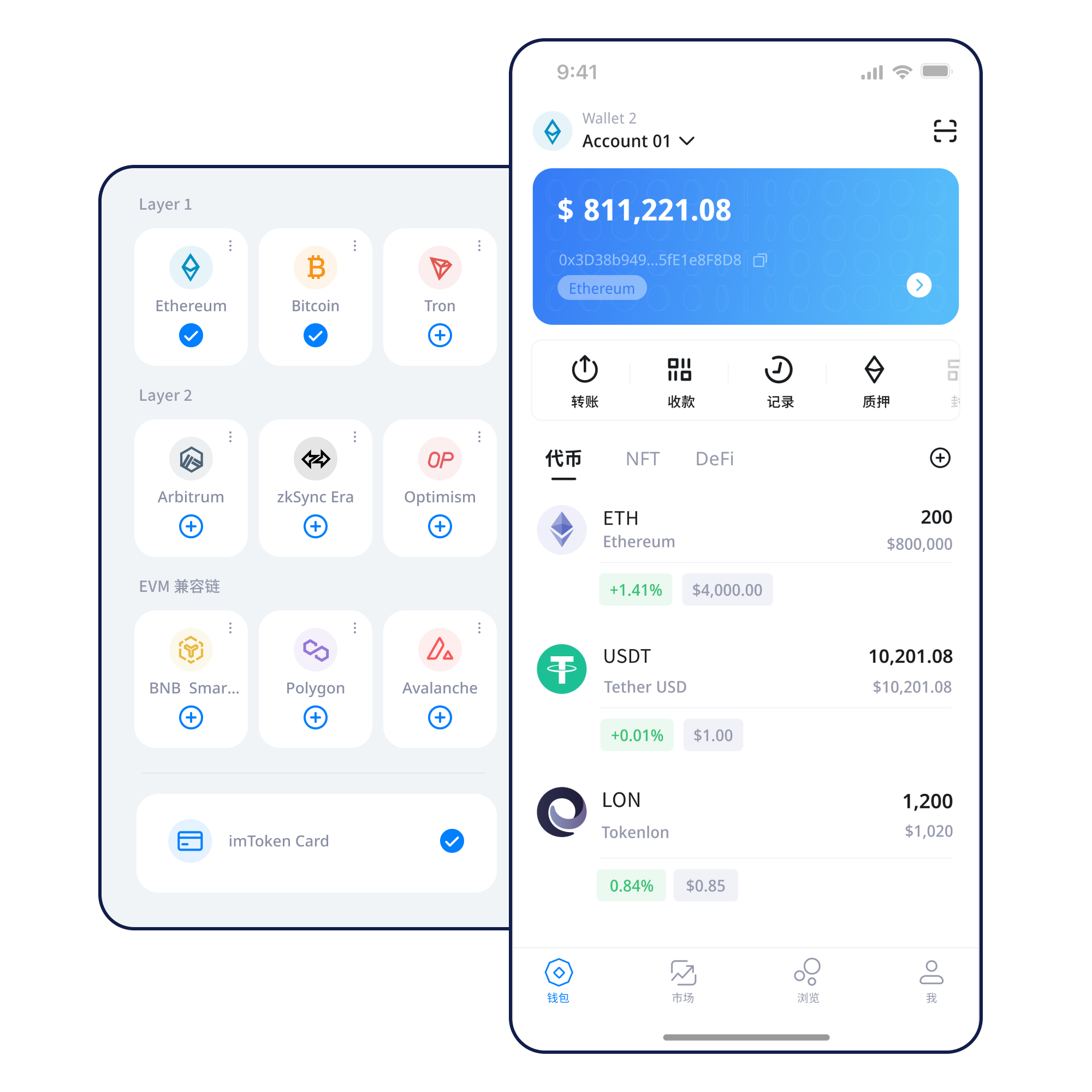
Start with a real task and learn the network, address, signature and security checks that belong to it.
Separate creation from import, then make a private offline backup immediately.
Open guide →Never send seed phrases or private keys to anyone or store them as ordinary photos, messages or cloud files.
Open guide →State the network and asset clearly, and consider a small test when using a new destination.
Open guide →Check network, address, asset, amount and fee, then use the transaction hash to verify status.
Open guide →Connection only creates a session; every signature and approval still needs a separate review.
Open guide →Assets, networks, transactions, Web3 and security belong to one operating context.
Separate assets and history by network. Check the chain before interpreting balances or token contracts.
View assets, manage networks and review transaction history while treating device security and signing checks as normal workflow.
Confirm network and address when receiving; verify amount, gas and destination when sending.
Browser connections establish sessions; signatures, approvals and contract actions remain separate decisions.
Keep recovery credentials offline and periodically review DApp approvals you no longer need.
Choose a topic to focus the stage; all text remains in server-rendered HTML without scripting.
A multi-chain wallet can show many networks in one interface, but every action still occurs on one specific chain.
Learn more →Nodes validate transactions under public rules and organize them into blocks; status depends on confirmation and finality.
Learn more →
EVM networks share an execution model, but chain IDs, gas assets and deployments remain different.
Learn more →
Layer 2 systems scale activity while settling to a base chain; bridging and withdrawal timing vary by design.
Learn more →
Gas reflects network resource use, while confirmations reflect continued chain acceptance.
Learn more →Use the single download entry and avoid unknown installation links.
Know whether you are creating or importing, and only expose recovery material on a trusted device.
Store seed phrases offline, never disclose private keys and avoid screenshots or ordinary cloud storage.
Verify network name, gas asset and destination service to avoid a chain mismatch.
Verify address, network and amount; consider a small test for a new destination or larger transfer.
Use transaction hashes to check status, review DApp signatures and revoke approvals you no longer need.
After opening a DApp, verify the domain before connecting. Account requests, message signatures, transaction signatures and token approvals represent different permissions.
Wallet security is a set of repeatable habits. Users keep control of seed phrases and private keys; legitimate staff do not ask for them. Verify address, network and amount before transfers, review each DApp signature, inspect spenders and allowances, and revoke permissions you no longer need. Shared devices, public networks, remote-control tools and clipboard manipulation can affect what you see or enter.
Open Security Center →Start with addresses, seed phrases, private keys, networks, gas and transaction hashes, then move to DApps, signatures and approvals. These concepts make wallet prompts easier to evaluate.
Start learning →Learn the core concept, common misconceptions and practical verification checks.
Learn the core concept, common misconceptions and practical verification checks.
Learn the core concept, common misconceptions and practical verification checks.
Learn the core concept, common misconceptions and practical verification checks.
Learn the core concept, common misconceptions and practical verification checks.
Learn the core concept, common misconceptions and practical verification checks.
Understand staking as participation in network consensus, not a fixed-return promotion.
Learn Ethereum PoS, validator duties, reward sources, network state, withdrawals and exit flows. Rewards can change and exits may require waiting.
Learn the basics and risks →Validators can face penalties, smart contracts and third-party services can introduce risk, and digital asset prices can fluctuate.
Understand PoS and validators →Updates are organized by product, network, security and service context without invented dates or market claims.
Asset records live on the relevant blockchain. A wallet manages account access and signing capability. Changing devices does not move assets by itself; protecting and restoring access credentials is the critical part.
Prefer a private offline method that can survive long-term storage. Avoid chat, email, ordinary cloud drives and screenshots. Legitimate staff should not ask for your seed phrase.
Usually not. A password change does not invalidate a private key that has already been exposed. From a trusted environment, assess asset migration and approval revocation.
The same account can hold separate assets and history on multiple networks. Confirm the active network first, then verify the token contract and transaction records.
At minimum, verify the network, full destination address, asset, amount and fee. For a new destination or larger amount, consider a small test transfer first.
Gas is the fee paid for network computation and block space. It changes with congestion and transaction complexity. Paying more gas does not make an action absolutely safe.
A transaction hash lets you query status, block inclusion, sender, recipient, amount and fees in the relevant block explorer. It is a key troubleshooting reference.
Use the single download entry for product access. Downloads, signatures and approvals are user-initiated.